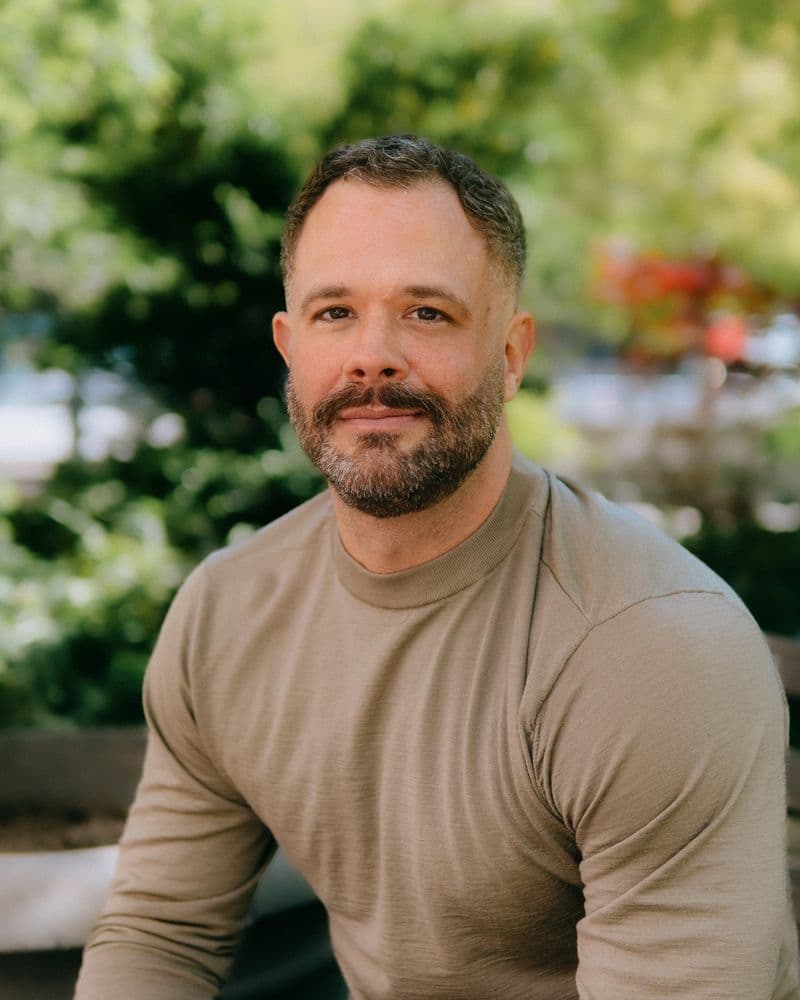
Aaron Tate
Director, User Experience Design & Research
aarontate@me.com · Salt Lake City, UT · linkedin.com/in/aarontatertot
Experience design and research leader with more than 20 years in the field, the last nine building the UX function at CHG Healthcare from its first hire to 21 people and a $3.5M annual budget. Took CHG from Level 1 to Level 5 on the Nielsen Norman Group's UX maturity scale. More recently, has made four connected investments in people, tools, process, and role design so the function can keep working as AI changes how software gets built. Each investment built on the last: a capable team made good tools possible, good tools made a faster process safe, and that process revealed where a new role was needed.
Core Strengths
- UX Org Design & Scaling
- Design Systems
- Research Strategy & Practice
- AI-Enabled Product Dev
- Executive & XFN Partnership
- User Experience Operations
- Hiring & Talent Development
- Service Design
Experience
Director, User Experience and Research
CHG Healthcare — Salt Lake City, UT
Jan 2022 – Present
- Lead the User Experience design and research function (21 people across four teams, a $3.5M annual budget), setting strategic direction for UX across seven major product initiatives and partnering with executive leadership to embed design and research into how the business makes decisions. Four direct reports (two UX managers, a UX Research manager, a Design Systems manager) each lead a team; direct reports have ranged from 3 to 12 over the tenure.
- After a recent internal assessment, CHG is at Level 5 on the Nielsen Norman Group's UX maturity scale: UX is pervasive across the digital organization and reaches external customers and internal teams, shaping decisions from strategy through delivery.
- People — AI curriculum. Created and lead a year-long internal curriculum for 20 designers and researchers covering AI fluency, designing for AI, and an ongoing foresight practice. Built the skills of the existing team ahead of the need, because every later investment depends on a capable team. Measured result: 20 AI-fluent designers and researchers.
- Tools — Unified Design System. Directed the build on a token-first architecture: design tokens drive shared component libraries and production-ready coded components, kept in sync through a versioned release and contribution model. 90+ components with guidance, one component set across seven brands. A four-stage adoption path lets products built before the system migrate incrementally. 250+ design-language documents supply context to AI coding tools. Modeled result: $19M annual value at full adoption across seven products, validated by engineering and product leadership. Front-end build time fell from 30% to 4–6% of engineering capacity; adoption is at 60% of the portfolio, targeting 100% by 2027.
- Process — AI-enabled development. Piloted an AI-enabled squad of one UX designer, one product manager, and one engineer in late 2025, now rolling out across the digital organization. Work starts from a specification and a first working version can exist within hours. Put design and research in as active partners from that first specification, so quality and user-centered design hold as pace rises. Adopted by 75% of the 28–30 product teams across seven initiatives. Measured result: time from discovery to development dropped from weeks to hours.
- Adaptability — Experience Architect. Authored a new role for where product management, design, research, and engineering have blurred. The Experience Architect has deep knowledge in product design and user research and working capability in product management and front-end development, so one person can hold a journey together. Product managers keep the roadmap and backlog; the Experience Architect is accountable for the experience.
- Championed native mobile apps for the provider audience after user research showed behavior gaps. Mobile now exceeds web on engagement and contributes 4–6% to days booked at NPS 88, valued at $3–4M in additional annual revenue.
- Present directly to the Chief Growth Officer, VP of Product, and VP of Engineering.
- Facilitate design thinking workshops, design sprints, discovery sessions, and executive alignment sessions across the organization and at every level, increasing cross-functional alignment and collaboration.
Senior Manager / User Experience Manager, UX & Research
CHG Healthcare — Salt Lake City, UT
Dec 2017 – Jan 2022
- First UX hire at CHG. Built the function around CHG's first digital product, moving its design from an agency to in-house, with no UX practice in place.
- Grew the team to eight designers by 2019 and established UX Research as a distinct practice, reaching a combined team of 8 designers and 4 researchers.
- Taught product, engineering, and executive audiences what UX does and where it fits in the software development lifecycle, and made the case for putting the user at the center of what CHG builds.
- Co-created the UX discovery playbook that standardized research methods across product teams. Set shared design standards that became the base of the design system.
Lead Product Designer
EdSurge — San Francisco, CA
Dec 2015 – Mar 2017
- Led UX strategy, rebranding, and the full platform redesign for a venture-backed edtech company. Built brand identity systems for its subsidiary products.
Lead User Experience Designer
YouNoodle — San Francisco, CA
Sep 2011 – Oct 2015
- Led platform rebranding and UX strategy across the product suite. Turned user research into product strategy for the organization.
Co-Founder & Lead Designer
FindFred (a Roy G Biv Corp venture) — Columbus, OH
Jan 2009 – Sep 2011
- Co-founded and ran a social matching startup alongside the Art Director role at Roy G Biv. Led UX design, brand identity, social media strategy, and national marketing campaigns across print and digital.
Earlier career in design and art direction
Various — Columbus, OH
2002 – 2011
- Art Director, Roy G Biv Corp (2007–2011). Created advertising and promotional materials across five company brands, redesigned recurring campaigns, and built websites for the company's restaurants, bars, and nightclubs. Led vendor management and partnership programs.
- Art Director, Outlook Media (2003–2006). Led the redesign of Outlook Weekly magazine and ran weekly publication design, cover art, and editorial layout. Built marketing materials across five brands.
- Director of Design, The Chrome Foundation, freelance (2002–2005). Built brand identity and guidelines for a non-profit, ran an annual advertising campaign across 15 national markets, and managed marketing budget and vendors.
Education
Bachelor of Fine Arts, Graphic Design
West Virginia University, Morgantown, WV
Thought Leadership
After the Interface — essay series on system governance, trust design, and the evolution of UX practice in the AI era.
Read the writing